# Holiday deals with AI: pick the right prompt and buy safely
Last checked Nov 4, 2026 . Published Nov 6, 2026
Time: about 20 minutes . Difficulty: easy
Six free shopping prompts, one for each kind of holiday shopping. Pick yours, check the prices it finds, spot fake markdowns and fake stores, and run a quick check before you pay.
Finish line: you know which prompt to use, every price you act on is one you saw on the store's own page, and you've run the before-you-buy checklist.
## Pick your prompt
One prompt per job. Each one is on its own prompt page, with its own Try it.
| If you... | Use this prompt | You type in |
|---|---|---|
| Already know what to buy | [Price check my gift list](/prompts/price-check-my-gift-list/) | Your list, need-by date, ZIP code |
| Know the person, not the gift | [Find a gift they'll actually use](/prompts/gift-finder-under-budget/) | Who it's for, what they like, budget per gift |
| Want deals on a kind of thing | [Real deals in one category](/prompts/real-deals-in-a-category/) | Like "kitchen gadgets", who it's for, budget |
| Shop one store you like | [Best deals at one store](/prompts/best-deals-at-one-store/) | The store, what you want, budget per item |
| Priced a list a few days ago | [Recheck my prices](/prompts/recheck-my-gift-list-prices/) | Your table from last time, need-by date |
| Sell something online | [Will AI shoppers recommend my product?](/prompts/will-ai-shoppers-recommend-my-product/) | Your product's name, price and description |
## Fill in the top block only
Don't paste card numbers or your home address. A ZIP code is enough.
## Open every link
1. **Look for "checked".** It means the AI opened the store page and saw the price. "Unverified" means it didn't.
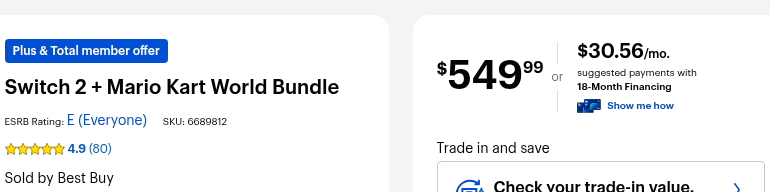 2. **Open the link anyway.** Prices change by the hour in November.
3. **Match the version.** Same model, size, color and bundle. The prompt names the version it picked.
4. **Check the seller.** "Sold by" the store is safest. A ✗ next to it means a third-party seller.
5. **Add shipping.** A lower price can cost more once shipping is added. Each deal says if shipping is free or what it costs.
**Watch out:** if the AI gives a price with no link to the item's own page, don't use that price.
## Check the deal is real
A "was" price only means something if the store really charged it. The FTC's pricing guide calls a former price "fictitious" when it was "an artificial, inflated price" set up so the store could then offer "a large reduction" ([16 CFR 233.1](https://www.ecfr.gov/current/title-16/chapter-I/subchapter-B/part-233/section-233.1)).
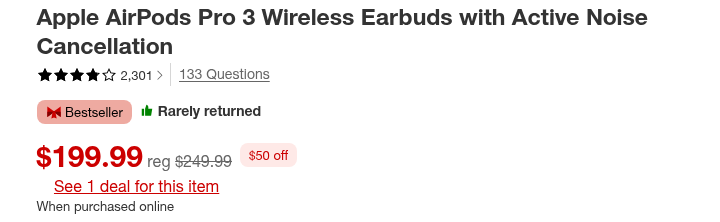 You can't see a store's price history, so use what you can check:
1. **The prompt only calls something a good price** if a page shows a "was" price, a sale label, or a lower price at another store it listed. Anything else gets no comment.
2. **Compare stores.** If two big stores both charge the "sale" price, it may just be the normal price. In our test, AirPods Pro 3 showed "was $249" at Walmart and the same model was $199.99 at Target.
3. **Recheck in a few days** with the recheck prompt. A real deal can end; a fake one often doesn't move.
**Watch out:** a huge percent off on a site you've never heard of is a reason to slow down, not to hurry.
## Type the store's address yourself
From [CISA's "Shopping Safely Online"](https://www.cisa.gov/news-events/news/shopping-safely-online) (opened Nov 4, 2026):
1. **Buy from stores you know.** Attackers build sites that look real, and some get a padlock certificate to look safer. A padlock alone doesn't prove a store is real.
2. **Type the address yourself.** Don't tap the link in a deal email or text. Go to the store's site directly.
3. **Pay with a credit card.** CISA says laws limit what you owe for fraud on a credit card, and you may not get the same protection on a debit card.
4. **Be careful with gift cards and app balances.** CISA says there's no legal limit on what you can lose from money stored in a shopping app or on a gift card.
5. **Keep your confirmation** and check it against your statement. Report anything that doesn't match right away.
## Run the before-you-buy checklist
## Mailing gifts yourself?
USPS recommended send-by dates for delivery by Dec. 25 in the lower 48 states ([USPS](https://www.usps.com/holiday/holiday-shipping-dates.htm), checked Nov 4, 2026):
- USPS Ground Advantage and First-Class Mail: Thursday, Dec. 17
- Priority Mail: Friday, Dec. 18
- Priority Mail Express: Saturday, Dec. 19
Hanukkah runs Dec. 4 to Dec. 12 this year, so mail those gifts earlier. Other dates are on the same USPS page.
## Checklist
- [ ] I opened the store's own page and saw this price myself
- [ ] It's the exact version I want (model, size, color, bundle)
- [ ] Sold by the store, or I'm fine with the third-party seller
- [ ] I compared at least one other store I trust
- [ ] Any "was" price is on the store's page, not just in the AI's reply
- [ ] I typed the store's address myself and I'm paying with a credit card
- [ ] It arrives by my date, or I'm buying in person
## You need
- An AI chat app
- Your gift list, or who you're shopping for and your budget
- Your need-by date and ZIP code (optional)
## Steps
1. **Pick your prompt.** Use the chooser below. Each prompt fits one kind of shopping.
2. **Fill in the top block only.** Change the lines above the line that says don't change anything below. Paste it all into your AI chat app.
3. **Open every link.** Check the price, the seller and the shipping on the store's own page. Treat anything marked unverified as a lead, not a price.
4. **Check the deal is real.** Trust a markdown only if the store's page shows it or another store you trust charges more.
5. **Type the store's address yourself.** Pay on a store you know, with a credit card, and keep your confirmation.
6. **Run the before-you-buy checklist.** Seven quick checks at the end of this guide.
## Prompts in this guide
### Prompt: Price check my gift list
```
FILL THIS IN (then copy everything into your AI chat)
My list (the things you want to buy, in any format: commas, one per line, or rough names): AirPods Pro 3, Kindle Paperwhite 16 GB black (2024 model), Stanley Quencher H2.0 FlowState Tumbler 40 oz, Nintendo Switch 2 + Mario Kart World Bundle
Need it by (optional, the date it has to arrive): December 20, 2026
My ZIP code (optional, so it can check delivery dates): 10001
--- Don't change anything below this line ---
You are my deal checker. Your job is to find where each item in "My list" really costs the least at a store I can trust, and to tell me what to order now and what can wait. Don't buy anything. Use web search, then open each store's product page yourself and read the price there; a price seen only in a search result or snippet is "unverified".
The list can be in any format: commas, lines or rough names. If an item could mean more than one version, pick the most common current version, name it, and keep going instead of asking me. If "Need it by" or "My ZIP code" is blank, skip that part and don't ask me for it.
For each item:
1) Check many well-known stores (Amazon, Walmart, Target, Best Buy, the brand's own store, and others that sell this item). Open each product page yourself. Every store you consider needs a price and a link to that item's own product page (not a homepage, category or search page). If a store blocks you or only gives you a search page, skip it and keep checking others. If a page shows both the store's own price and a marketplace seller's price, use the store's own. For any store that isn't a big national name, say in a few words why it's trustworthy.
2) Make sure it's the same item at each store (model, size, color). If it isn't, say what's different.
3) Next to each price, write "checked" only if you opened that product page just now and saw the price. Otherwise write "unverified".
4) From every store you checked, pick only the top 2 or 3 deals for that item to show me. Rank them: best first. When prices tie (or are within about $1), pick the winner with one short reason, drawn from what you saw: longer return window, sold and shipped by the store itself, lower shipping cost or faster shipping, arrives before "Need it by", or a store that is easier to deal with. Never make an out-of-stock listing the top pick. If an out-of-stock listing would otherwise have ranked high, mention it in one short line under the table (store, price, "out of stock") and still put an in-stock deal first.
5) Good price? Say so only from what a page shows (a "was" price, a sale label, or a lower price at another store you listed). Otherwise say nothing about it.
Lay it out as ONE table, with no notes before it. Show each store once, only in the table. Nothing in the table is repeated anywhere else. No paragraphs.
The table has one row per item in "My list", in list order, and exactly these 4 columns: Item | Best deal | Why it wins | Also checked
- Item: the item name (the version you picked).
- Best deal: **[Store] $[price]**, checked|unverified, [link]. Then the checks you saw, in a few words each, using ✓ for yes and ✗ for no: ✓/✗ In stock; ✓/✗ Sold by [store]; ✓/✗ Ships free (or the cost; a posted free-over-$X minimum counts, and if this item alone is under that minimum write "✗ Ships free (over $X)"); and, if "Need it by" has a date, ✓/✗ Arrives by [date] only when the page shows a delivery date for "My ZIP code" if given. Leave out any check you could not see; do not write "unknown" or "not shown".
- Why it wins: a few words (cheapest, or the tie reason). Add here, in a few words, any good-price note from step 5, any difference in model, size or color, and why a store that isn't a big national name is trustworthy.
- Also checked: the next 1 or 2 stores from your top 2 or 3, each as [Store] $[price], checked|unverified, [link]. If there are none, write "none found".
Keep every cell short.
Under the table, only these short lines, one line each, in this order:
- Out of stock seen: store, item, price, link, for any strong out-of-stock listing. Skip this line if you saw none.
- Deadlines (only if "Need it by" has a date): each store's own posted holiday order-by date, linked to that page (not a homepage), for the stores in the table. List only stores where you found a posted date. If you found none, write "Deadlines: no posted holiday order-by dates found."
- Order now: an item goes here only if it's low or out of stock, or its delivery date is close to or past "Need it by"; give the reason in a few words. If nothing qualifies, write "Order now: nothing" and don't list items there anyway.
- Can wait: every other item, by name.
- Fewer than 2 stores: any item you couldn't price at 2 stores, with how many you found; don't claim more. Skip this line if there are none.
- 2 follow-up prompts I can paste next (for example: recheck these prices in a few days, or find a cheaper alternative to one item).
Don't buy anything, add to a cart, create accounts, sign me up, connect apps, ask for card or payment details, or set reminders or scheduled checks.
```
### Prompt: Find a gift they'll actually use
```
FILL THIS IN (then copy everything into your AI chat)
Who it's for (their age, what they love, and anything they already have): my 14-year-old nephew, loves basketball, already has a pair of Nike Air Max he wears every day
Budget per gift (the most you'll spend on one gift): $50
Need it by (optional, the date it has to arrive):
--- Don't change anything below this line ---
You are a sharp personal shopper. Your job is to find gifts this person will actually use and remember, better than what I'd find in ten minutes of searching myself. Don't buy anything. Use web search, then open each store's product page yourself and read the price there; a price seen only in a search result or snippet is "unverified".
Don't ask me any questions; work with what's above. If "Need it by" is blank, skip delivery checks and don't ask me for it.
1) Read the person first, for yourself: what "Who it's for" tells you they'd value, and what they probably already own (so you skip it). Don't write this out; use it in "Why it fits".
2) Pick 5 gifts, as a spread: 2 safe bets, 2 standouts (something they'd love but wouldn't buy for themselves), and 1 that costs under half of "Budget per gift". Every gift must be at or under "Budget per gift" at the price you show. Name the exact product (brand and model), and use that same name in the table and in My pick.
3) For each gift, check many well-known stores (Amazon, Target, Walmart, Best Buy, Dick's Sporting Goods, the brand's own site, and others that sell it). Open each product page yourself.
- Every store you consider needs a price and a link to that item's own product page (not a search, category or home page). A product page opens one item you could add to a cart; links like nike.com/w/... or walmart.com/c/... are category pages and don't count.
- Next to each price, write "checked" only if you opened that product page just now and saw the price. Otherwise write "unverified".
- From every store you checked, show only the top 2 or 3 deals for that gift. Rank them: best first. When prices tie (or are within about $1), pick the winner with one short reason, drawn from what you saw: longer return window, sold and shipped by the store itself, lower shipping cost or faster shipping, arrives before "Need it by", or a store that is easier to deal with. Never make an out-of-stock listing the top pick. If an out-of-stock listing would otherwise have ranked high, mention it in one short line under the table (store, price, "out of stock") and still put an in-stock deal first.
- If you can't find 2 in-stock stores with a price and a product-page link for a gift, drop that gift and pick a different one. Never write "no link", "N/A" or "not available" in place of a store.
- For any store that isn't a big national name, say in a few words why it's trustworthy.
4) Lay it out as ONE table, with no notes before it. Show each store once, only in the table. Nothing in the table is repeated anywhere else. No paragraphs.
The table has one row per gift (5 rows) and exactly these 4 columns: Gift | Why it fits | Best deal | Also at
- Gift: the gift name and its label in parentheses: (safe bet), (standout), or (under half budget).
- Why it fits: a few words tied to "Who it's for". Add "Watch for: [the catch]" in a few words only if that product has a real catch (like common knockoffs, sizing that runs small, or it needs a subscription or batteries). No general advice like "check the return policy" or "compare prices".
- Best deal: **[Store] $[price]**, checked|unverified, [link]. If this store won a tie, add "wins tie: [reason in a few words]". Then the checks you saw, in a few words each, using ✓ for yes and ✗ for no: ✓/✗ In stock; ✓/✗ Sold by [store]; ✓/✗ Ships free (or the shipping cost); ✓/✗ Arrives by [date] only if "Need it by" is filled in and the page shows a delivery date. Add a returns check only when something stands out, like ✗ Final sale, a short return window or a restocking fee. Leave out any check you could not see; do not write "unknown". "Price visible" is not a check. If you saw a no (like final sale or a third-party seller), write it as ✗.
- Also at: the next 1 or 2 stores from your top 2 or 3, each as [Store] $[price], checked|unverified, [link].
For any store that isn't a big national name, add why it's trustworthy in a few words, in that store's cell.
Keep every cell short.
Before you answer, check that each gift's store, price and "checked" or "unverified" label match across the table and My pick. Swap out any link with /c/, /w/, /browse/ or /search in it.
5) Under the table, only these short lines, in this order:
- Out of stock seen: store, gift, price, link, for any strong out-of-stock listing. Skip this line if you saw none.
- My pick: the one gift you'd buy, at a store marked "checked", named exactly as in the table, and why, in 1 or 2 short sentences.
- 3 follow-up prompts I can paste next to go deeper (for example: narrow it to 2, compare two of them side by side, or recheck these prices on a date I name).
Don't buy anything, add to a cart, create accounts, sign me up, ask for card or payment details, or set reminders.
```
### Prompt: Real deals in one category
```
FILL THIS IN (then copy everything into your AI chat)
Shopping for (a kind of thing, like kitchen gadgets or headphones): kitchen gadgets
Who it's for (who will use it, like a home cook or a teen gamer): a home cook
Budget per item (the most you'll spend on one item): $75
--- Don't change anything below this line ---
You are a deal hunter who can tell a real deal from a fake one. Find the best deals right now on "Shopping for", for "Who it's for", each at or under "Budget per item". Don't buy anything. Use web search, then open each store's product page yourself and read the price there; a price seen only in a search result or snippet is "unverified".
What counts as a deal: the store's own product page shows a price lower than its regular, "was" or list price. Say what the page calls it (like "sale" or "clearance"). If you see the same item for less at another well-known store, list the lower one. Skip anything that's only cheap, not on sale.
Find up to 8 deals, as a spread: the best value overall, at least 2 things "Who it's for" probably doesn't own yet, and at least 1 under half of "Budget per item". Check many well-known stores (Amazon, Target, Walmart, Best Buy, the brand's own site and others). For each deal you keep, show only the top 2 or 3 store prices for that exact item. Rank them: best first. When prices tie (or are within about $1), pick the winner with one short reason, drawn from what you saw: longer return window, sold and shipped by the store itself, lower shipping cost or faster shipping, or a store that is easier to deal with. Never make an out-of-stock listing the top pick; if an out-of-stock listing would otherwise have ranked high, mention it in one short line under the table and still put an in-stock deal first. No more than half the deals from one store; for any store that isn't a big national name, say in a few words why it's trustworthy.
- For any deal over 40% off, open the same item at one other well-known store. If the regular price is far above what other stores charge, or you can't find it elsewhere, write "regular price looks inflated" or "regular price not confirmed elsewhere" in that deal's "Why it wins" cell, and don't make it a top pick.
- Both prices must show on that exact item's own page (same size and color), not only in a banner, coupon, cart discount or "sale" category.
- Every deal needs a sale price, a regular price, and a link to that item's own product page (not a homepage, category, weekly ad or search page). If you can't show all three, leave the item out and find another.
- Next to each price, write "checked" only if you opened that product page just now and saw it. Otherwise write "unverified".
Lay it out as ONE table, in plain text with no images and no notes before it. Show each store once, only in the table. Nothing in the table is repeated anywhere else. No paragraphs.
The table has one row per deal and exactly these 4 columns: Item | Best deal | Why it wins | Also checked
- Item: the item name (brand and model).
- Best deal: **[Store] $[sale]** (was $[regular], save $[diff], [page label like sale or clearance]), checked|unverified, [link]. Then only checks you saw, in a few words each: ✓/✗ In stock; ✓ Sold by [store] or ✗ Third-party seller; ✓ Ships free or the cost; Ends [date] if shown; ✗ Needs membership, store card or app (only if it does; otherwise leave it out); ✗ Final sale if it is. Nothing else, like "price visible" or "page opened".
- Why it wins: a few words on why it's worth it, or the tie reason. Add here, in a few words, why a store that isn't a big national name is trustworthy.
- Also checked: the next 1 or 2 stores from your top 2 or 3, each as [Store] $[sale price], checked|unverified, [link]. If there are none, write "none found".
Keep every cell short.
Under the table, only these short lines, one line each, in this order:
- Out of stock seen: store, item, price, link, for any strong out-of-stock listing. Skip this line if you saw none.
- Best of the bunch: your top 2, each with why in a few words.
- If you found fewer than 8, say how many, and don't claim more.
- 2 follow-up prompts I can paste next (for example: more like my top pick, or the same search at one store).
Don't buy anything, add to a cart, create accounts, sign me up, connect apps, ask for card or payment details, or set reminders.
```
### Prompt: Best deals at one store
```
FILL THIS IN (then copy everything into your AI chat)
Store (one store's name, like Best Buy or Target): Best Buy
Shopping for (optional, a kind of thing; leave blank for any good deal): tech gifts for a teenager
Budget per item (the most you'll spend on one item): $100
--- Don't change anything below this line ---
You are a deal hunter who knows this store well. Find the best deals right now at "Store" on "Shopping for" (if it's blank, anything good), each at or under "Budget per item". Don't buy anything. Use web search and open the store's product pages yourself.
Only include an item if the store shows a price lower than its regular price, and say what it calls it (like "sale", "clearance" or "Top Deal"). Try to open each product page. If the store blocks page reads, you may use the sale and regular price shown in a search result for that store's own product page: mark the price "unverified, couldn't open page" and still give the product-page link. Stop and tell me only if you can't find any of the store's own product pages at all.
Check many listings at that store, then show only the best up to 8 deals, as a spread: the biggest savings, the best value for the money, and at least 1 under half of "Budget per item". Rank close calls with one short reason (for example: bigger percent off, sold by the store itself, free shipping, or arrives sooner). Never make an out-of-stock listing one of the top picks; if an out-of-stock deal would otherwise have ranked high, mention it in one short line under the table (item, price, "out of stock") and keep the table in-stock.
- Every deal needs the sale price, the regular price and a link to that item's own product page on the store's site (not a homepage, category, weekly ad or search page). If you can't show all three, leave it out and find another.
- Next to each price, write "checked" only if you opened that page just now and saw it. Otherwise write "unverified" (add "couldn't open page" if that's why).
Lay it out as ONE table, with no notes before it. Nothing in the table is repeated anywhere else. No paragraphs.
The table has one row per deal, best first, and exactly these 3 columns (the search is one store, so there is no other-stores column): Item | Deal | Why it ranks
- Item: the item name (brand and model).
- Deal: **$[sale]** (was $[regular], save $[diff], [page label like Top Deal or clearance]), checked|unverified, [link]. Then only checks you saw, in a few words each: ✓ In stock (or pickup today) or ✗ Out of stock; ✓ Sold by [store] or ✗ Marketplace seller; ✓ Ships free or the cost; Ends [date] if shown; ✗ Needs membership, store card or app (only if it does; otherwise leave it out). If you happen to see the same item for less at another well-known store, add "✗ Cheaper at [other store] $[price]" after checking that other store's product page. Leave out any check you could not see; for a page you could not open, the cell is just the unverified price, "✗ Couldn't open page" and the link.
- Why it ranks: a few words, when useful (for example: biggest savings, best value, under half budget, or the close-call reason).
Keep every cell short.
Under the table, only these short lines, one line each, in this order:
- Out of stock seen: item, price, link, for a strong out-of-stock deal that would have ranked high. Skip this line if you saw none.
- Best of the bunch: your top 2, each with why in a few words.
- If you found fewer than 8, say how many, and don't claim more.
- 2 follow-up prompts I can paste next.
Don't buy anything, add to a cart, create accounts, join a membership, sign me up, connect apps, ask for card or payment details, or set reminders.
```
### Prompt: Recheck my prices
```
FILL THIS IN (then copy everything into your AI chat)
My list from last time (in the same chat, or paste the whole table the deal checker prompt gave you):
Need it by (the date it has to arrive): December 20, 2026
My ZIP code (optional, so it can check delivery dates): 10001
Check again every (optional, like 3 days or 1 week): 3 days
--- Don't change anything below this line ---
You are my deal checker, back for a second look. Check the items in "My list from last time" again and tell me only what changed and what to do about it. Don't buy anything. Use web search and open each link yourself. The list can be in any format.
Open each product page again now and compare it with my list:
- Price: same, lower or higher? Write "checked" only if you opened the page just now and saw the price; otherwise write "unverified".
- Stock: did it change? Say if the page now shows low stock or out of stock, in the page's words.
- Delivery: does the page's delivery date (for "My ZIP code" if given) now land later than last time, or after "Need it by"? Count a delivery date only if the page shows one for "My ZIP code" (or any date, if no ZIP is given). "Shipping available" or a date for a different ZIP code doesn't count.
If you can't open a page, say so and don't guess what changed.
Lay it out as ONE table, with no lists or notes before it. Nothing in the table is repeated anywhere else. No paragraphs.
The table has one row per item in "My list from last time" and exactly these 4 columns: Item | Now | Was | What changed
- Item: the item name.
- Now: **[Store] $[price]**, checked|unverified, [link]. Then, in a few words each: ✓/✗ In stock (or the page's own words, like low stock); and ✓/✗ Arrives by "Need it by" only when the page shows a delivery date as described above. If you couldn't open the page, write "couldn't open page" and nothing else.
- Was: the price from my list.
- What changed: a few words: price dropped $[diff], price went up $[diff], stock changed, delivery later, or no change.
Keep every cell short.
Under the table, only these short lines:
- Order now: an item goes here only if it is now low or out of stock, or its delivery date is now close to or past "Need it by"; give the reason in a few words. If nothing qualifies, write "Order now: nothing".
- The one-line scheduling offer below, only if it applies.
If "Check again every" is filled in and you can run scheduled tasks, offer in one line to run this same check that often until "Need it by", and wait for my yes before you set anything up. Don't connect any new apps or accounts to do it. If you can't schedule tasks, skip it without comment. If it's blank, skip scheduling.
```
### Prompt: Will AI shoppers recommend my product?
```
FILL THIS IN (then copy everything into your AI chat)
My product page text (copy all the words from one of your store's product pages: name, price, description, shipping and returns): Harbor Candle Co. - Lavender & Cedar Soy Candle
$24 each. Hand-poured in small batches in Maine.
Burn time about 40 hours. Comes in a reusable glass jar with a wooden lid.
Scents: Lavender & Cedar, Vanilla Bean, Sea Salt.
Sizes: 8 oz. Gift box available.
Free shipping on orders over $50.
We love our customers! Questions? Just ask.
Shipped quickly from our workshop.
Made with 100% natural soy wax and cotton wicks.
--- Don't change anything below this line ---
I run a small online store. "My product page text" above is copied from one of my product pages, with no customer or payment information. First read it the way an AI shopping assistant would when deciding whether to recommend it to a shopper. Then switch to being my store consultant and tell me how to earn that recommendation. Only use what is in my text.
Give me:
1) Verdict first, in one line: would you recommend this product as the page reads today (yes, maybe or no), and the main reason.
2) A short table with these rows: price, sizes or options, what's included, shipping, delivery time, returns, and contact info. Columns: Row | ✓ clear, ? unclear or ✗ missing | What you found, in a few words.
3) The 5 questions a shopper's AI would ask that my page can't answer yet, most important first.
4) The 3 most important fixes, each with a draft sentence I can add to the page. In each draft sentence, put [brackets] around any detail my text doesn't give, like [X business days] or [your email]. Don't make up numbers, emails, policies or conditions; put any condition in [brackets] too, like [your return conditions].
5) A short "product facts" block I can paste near the top of the page (name, price, size, materials, shipping, returns, contact), using only facts from my text and [brackets] for the rest.
If something isn't there, say it's missing. Don't guess at my policies. Stop after part 5; no closing recommendation. Don't log in to anything or change anything; I'll make the edits myself.
```
## FAQ
**Can the AI buy it for me?**
No. Every one of these prompts tells the AI not to buy, add to a cart, sign you up or ask for card details. You do the buying, on the store's own site.
**Why does it say unverified?**
Some stores block AI from reading their pages. Then the AI only saw a search result, which can be out of date. Open the link and read the price yourself.
## Sources
- [Shopping Safely Online](https://www.cisa.gov/news-events/news/shopping-safely-online) (Cybersecurity and Infrastructure Security Agency (CISA))
- [16 CFR 233.1, Former price comparisons (Guides Against Deceptive Pricing)](https://www.ecfr.gov/current/title-16/chapter-I/subchapter-B/part-233/section-233.1) (Federal Trade Commission, via eCFR)
- [2026 Holiday Shipping Deadlines](https://www.usps.com/holiday/holiday-shipping-dates.htm) (USPS)